What Plastic Materials Are Used For 3D Printed Components?
As an experienced professional with two decades in additive manufacturing, I would like to walk you through the key plastic materials used for manufacturing plastic 3D-printed components at our facility. At Shenzhen Honmor Precision Technology Co., Ltd., we focus on delivering high-quality plastic 3D printed components for industrial and consumer applications. In this article I will outline material selection criteria, common material grades, our product parameters, and frequently asked questions to help buyers and designers understand how to choose the right plastic for their 3D printed parts.
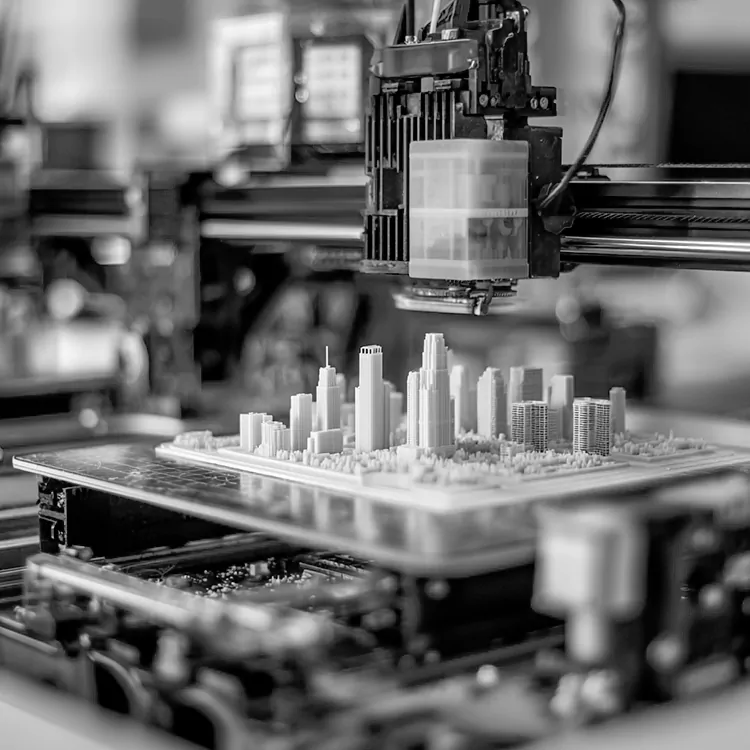
Why material choice matters for plastic 3D printed components
When you order plastic 3D printed components from our factory, one of the first decisions is selecting the appropriate plastic material. The plastic material influences mechanical strength, thermal resistance, chemical resistance, surface finish, cost, and manufacturability. At Shenzhen Honmor Precision Technology Co., Ltd. we help our clients evaluate trade-offs such as cost vs. performance, ease of printing vs. durability, and post-processing vs. final use. Choosing the wrong plastic material can lead to parts that warp, fail prematurely, or underperform in service.
Common plastic materials for 3D printing and how we use them
Below is a summary table of typical materials we offer for our plastic 3D printed components. Each line describes the material, typical properties, and suitable applications. At our factory we maintain stock and process knowledge for all these materials.
| Material | Typical properties | Primary use cases for our plastic 3D printed components |
| PLA | Easy to print, good dimensional accuracy, low cost, lower heat & chemical resistance. | Concept models, visual prototypes, low-load enclosures. |
| ABS | Tougher than PLA, moderate heat resistance, good impact strength. | Functional prototypes, snap-fit parts, housings for moderate loads. |
| PETG | Good layer adhesion, chemical/humidity resistance, ease of printing. | Parts exposed to moisture, clear or semi-transparent enclosures, medium durability parts. |
| Nylon / Polyamide | High toughness, good impact and wear resistance, suitable for loads, can absorb moisture. | Functional end-use parts, gears, wear surfaces, components for robotics or automotive applications. |
| TPU / TPE | Flexible, elastic, good vibration damping and impact absorbing. | Flexible connectors, vibration mounts, gaskets integrated in 3D printed geometry. |
| Polycarbonate (PC) | Very high strength and heat resistance, requires more printing control. | High-performance components, structural parts subject to high stress or temperature. |
| Composite/Glass-filled or Carbon-fiber-filled plastics | Enhanced stiffness and strength via reinforcing fibers mixed into base plastic. | Lightweight structural components, aerospace or automotive use where high stiffness is required. |
How we specify product parameters at our factory
At Shenzhen Honmor Precision Technology Co., Ltd. we treat product parameters seriously. For each lot of plastic 3D printed components we record key parameters so our customers are clear about capabilities and suitability. Below is a sample specification sheet (generic) that we use when quoting and manufacturing our parts. We tailor parameters to specific client drawings and performance requirements.
| Parameter | Description | Typical value at our factory |
| Material grade | Plastic resin / filament / powder used for 3D printing | e.g., Nylon PA12, PETG filament, PC-CF composite |
| Print technology | Technology used to produce the parts (FDM, SLS, SLA, MJF) | SLS for Nylon parts; FDM for PETG or ABS; SLA for visual prototypes |
| Layer thickness | Height of each printed layer (affects surface finish and build time) | Standard: 0.1–0.2 mm; Fine finish: 0.05 mm |
| Tensile strength | Maximum tensile stress the material can sustain | Nylon PA12: ~50 MPa; PC: ~70 MPa |
| Elongation at break | Percentage deformation before failure | TPU: up to 200%; ABS: ~9% |
| Heat deflection / service temperature | Highest temperature part can reliably operate | PETG ~70°C; PC ~120°C; Nylon varies 80–100°C |
| Color / Finish | Available colors and surface finish (matte, semi-gloss) | Standard natural; custom color available |
| Tolerance | Dimensional tolerance of as-printed part | ±0.3 mm typical; ±0.1 mm achievable |
| Post-processing | Any finishing operations (sanding, coating, dyeing) | Optional; quoted separately |
Frequently Asked Questions
Question: What material should I choose for a plastic 3D printed component that must bear load and heat?
Answer: High-performance materials such as polycarbonate (PC) or Nylon (PA12) are recommended for load-bearing and elevated temperature applications. Our factory uses SLS for Nylon PA12 and FDM/MJF for PC to ensure durability and heat resistance.
Question: Are PLA and ABS sufficient for plastic 3D printed components?
Answer: PLA and ABS are suitable for prototypes and low-demand parts. For end-use applications requiring wear, chemical resistance, or heat resistance, Nylon or PC is recommended.
Question: Can flexible plastic materials be used for plastic 3D printed components?
Answer: Yes, TPU and TPE can be used for flexible parts to absorb vibration or bend without breaking. Trade-offs include more challenging printability and slightly reduced dimensional precision.
Conclusion
At Shenzhen Honmor Precision Technology Co., Ltd., we prioritize high-quality production of plastic 3D printed components. Our expertise and range of materials ensure we can provide the right solution for our clients' needs, balancing performance, cost, and manufacturability.
Related News
- What Makes Complex 5 Axis CNC Machining Parts the Backbone of Advanced Manufacturing?
- Why High Tolerance Titanium Turned Parts Are the Backbone of Aerospace and Medical Innovation?
- Why Are 5-Axis CNC Machined Auto Parts the Smart Choice for Complex Automotive Components?
- Why Are CNC Aluminum Turned Parts the Preferred Solution for Lightweight, High-Precision Components?
- Can Fast 3D Printed Prototypes Really Accelerate Your R&D and Reduce Costs?
- CNC Prototype Metal Components: Why Are They Essential for Your Next Project
Leave me a message