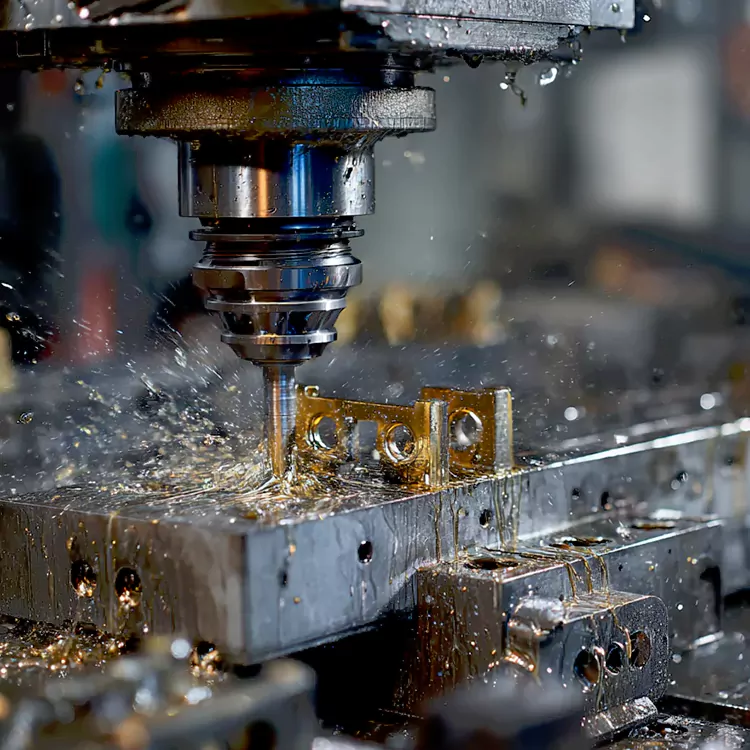
Can Fast 3D Printed Prototypes Really Accelerate Your R&D and Reduce Costs?
Product development teams often face long lead times and high mold costs when validating new designs. Traditional CNC machining or injection molding can take weeks and require significant upfront investment. This article explores whether Fast 3D Printed Prototypes from Honmor offer a practical solution for urgent R&D trials, design verification, and low‑volume part production. We examine the technical capabilities, material options, accuracy levels, and the manufacturing advantages that make Honmor a trusted partner for industries ranging from automotive to medical devices.
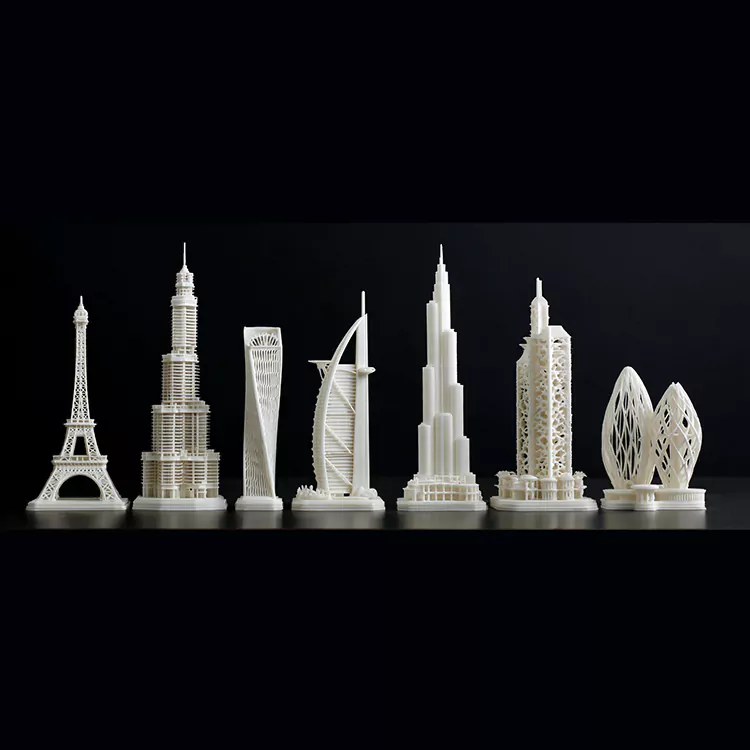
1.The Challenge of Rapid Prototyping in Modern R&D
In today’s competitive market, speed to market is critical. Engineers need physical parts to test fit, form, and function before committing to expensive production tooling. Traditional prototype machining—such as CNC milling or casting—often requires lengthy setup, specialized programming, and substantial material waste. For complex geometries with internal cavities or undercuts, conventional methods may even be impossible without multi‑step assembly.
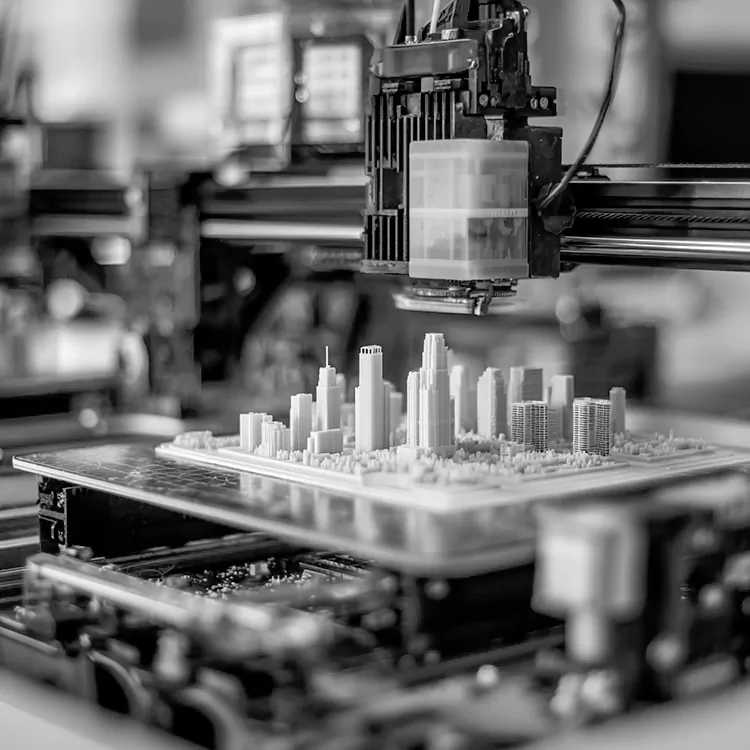
Fast 3D Printed Prototypes address these bottlenecks by building parts layer by layer directly from digital files. Technologies like FDM (Fused Deposition Modeling) and SLA (Stereolithography) enable quick turnaround times, often within 1‑5 days, without the need for molds or fixtures. Honmor has integrated these processes into its service portfolio, offering engineers a reliable way to test multiple design iterations in a single week. This article provides an objective look at the specifications, advantages, and real‑world applications of these rapid prototypes.
2. Technical Specifications & Product Parameters
Understanding the technical capabilities helps you select the right process for your project. Below are the key parameters for Fast 3D Printed Prototypes as offered by Honmor.
| Parameter Metric | Product Specification Details |
| Available Technologies | FDM (Fused Deposition Modeling), SLA (Stereolithography) |
| Compatible Materials (Plastic) | ABS, PLA, PETG, TPU, Nylon, High‑Temp Resin (SLA) |
| Compatible Materials (Metal) | Low‑temperature aluminum alloy powder (for urgent metal prototypes) |
| Dimensional Accuracy | ±0.1 mm (parts ≤100 mm); ±0.2 mm (parts 100‑300 mm) |
| Surface Roughness | FDM: Ra 3.2‑6.3 μm; SLA: Ra 1.6‑3.2 μm (as‑printed) |
| Maximum Build Volume | FDM: 400×400×400 mm; SLA: 200×200×200 mm |
| Delivery Cycle | 1‑3 days (simple structures); 3‑5 days (complex structures) |
| Max Order Quantity (per batch) | 50 pieces |
| Post‑Processing Options | Sandblasting, polishing, painting, annealing (for heat resistance) |
| Quality Certifications | ISO 9001:2015, ISO 13485:2016 (medical‑grade), IATF 16949:2016 |
3. Core Features of Fast 3D Printed Prototypes
The value of Fast 3D Printed Prototypes lies in three distinct advantages that directly address the pain points of traditional prototyping.
Ultra‑Short Delivery Cycle
Time is often the most critical factor in R&D. Honmor leverages industrial‑grade dual‑nozzle printers and pre‑configured material libraries to reduce preparation time. Simple structures (e.g., small electronic housings) can be delivered in just 1‑3 days, while complex assemblies (e.g., automotive brackets with moving parts) are ready within 3‑5 days. This speed allows design teams to test and iterate quickly, compressing development schedules significantly.
Design Freedom and Complexity
Unlike subtractive methods, 3D printing can produce hollow cavities, interlocking features, and thin walls in a single build. When you customize a prototype, even non‑standard designs—such as irregular medical device shells or organic‑shaped consumer goods—can be realized without additional tooling. This flexibility encourages innovation because engineers are not constrained by machining limitations.
Low Trial Cost Without Molds
Since no mold opening is required, Honmor’s prototypes reduce initial investment. Customers can order as few as 1‑10 pieces for design verification, avoiding the waste associated with large‑batch traditional prototyping. This low‑risk approach makes it feasible to run multiple design variants and select the best performing one before committing to production tooling.
4. The Honmor Manufacturing Edge: Quality, Capacity, and Compliance
Choosing a service provider for Fast 3D Printed Prototypes requires confidence in their production infrastructure and quality systems. Shenzhen Honmor Precision Technology Co., Ltd., founded in 2007, operates an 8,000 m² workshop equipped with 266 advanced CNC machines—but also dedicated 3D printing cells for additive manufacturing. The company holds ISO 9001:2015 (quality management), ISO 14001 (environmental), ISO 13485:2016 (medical devices), and IATF 16949:2016 (automotive) certifications, ensuring that prototypes meet stringent industry requirements.
Honmor serves global brands such as Mercedes‑Benz, ABB, Huawei, BYD, Foxconn, Bridgestone, and Omron. Their experience with these high‑profile clients demonstrates a proven track record in delivering precision and reliability. For 3D printed prototypes, every part undergoes dimensional inspection using CMM (Coordinate Measuring Machines) and surface finish verification before shipping. The company also offers design consultation to optimize printability and reduce lead times.
5. Common Applications Across Industries
Fast 3D Printed Prototypes are versatile and find use in many sectors:
• Automotive – Functional prototypes for interior trim, brackets, ducting, and even tooling fixtures. Rapid iteration helps verify fit and ergonomics before steel molds are cut.
• Consumer Electronics – Enclosures for wearables, drones, and handheld devices. The ability to test button placement, cooling vents, and assembly clearances with low‑cost prototypes accelerates product launches.
• Medical Devices – Custom surgical guides, instrument handles, and implant trial parts. Honmor’s ISO 13485 certification ensures traceability and cleanliness for medical‑grade applications.
• Industrial Equipment – Replacement parts for legacy machinery, jigs, and end‑of‑arm tooling for robotics. When a critical component fails, a 3D printed replacement can be produced in days rather than weeks.
6. Post‑Processing and Best Practices
To get the most from your Fast 3D Printed Prototypes, consider the following finishing and handling guidelines:
• Surface Finishing – As‑printed parts have visible layer lines. For smoother surfaces, request sandblasting, polishing, or painting. SLA parts typically offer a smoother finish out of the printer.
• Strength Enhancement – Annealing (heat treatment) can improve the mechanical properties of certain materials like PLA or Nylon, increasing heat deflection temperature.
• Design for Printing – Minimise overhangs larger than 45° and consider adding self‑supporting features to reduce post‑processing time. Honmor’s engineering team can review your design and suggest improvements.
• Storage – Keep prototypes in a cool, dry place away from direct sunlight, especially for resin‑based parts, which may become brittle over time if exposed to UV.
7. Frequently Asked Questions
Q: What materials can be used for 3D printed prototypes?
A: Honmor offers a wide range of plastics including ABS, PLA, PETG, TPU, and Nylon for FDM, as well as standard, flexible, and high‑temperature resins for SLA. For metal‑like parts, low‑temperature aluminum alloy powder is available for urgent prototypes.
Q: How accurate are these prototypes?
A: Dimensional accuracy is ±0.1 mm for parts up to 100 mm and ±0.2 mm for parts between 100‑300 mm. This level is sufficient for most fit and functional tests.
Q: Can I order just one piece?
A: Absolutely. Honmor accepts orders as small as a single prototype. There is no minimum order quantity, making it cost‑effective for early‑stage validation.
Q: How long does it take to get a prototype?
A: For simple geometries, delivery can be as fast as 1‑3 days. Complex parts typically take 3‑5 days. Rush options may be available upon request.
Q: What industries do you serve with 3D printing?
A: We serve automotive, electronics, medical devices, industrial equipment, robotics, and consumer goods. Our ISO 13485 certification specifically supports medical applications.
Q: Can you handle both prototyping and full production?
A: Yes, while this service focuses on prototyping and low‑volume runs (up to 50 pieces per batch), Honmor also offers CNC machining and injection molding for larger volumes once the design is finalized.
8. Conclusion
Fast 3D Printed Prototypes from Honmor provide a pragmatic solution for R&D teams needing quick, accurate, and affordable physical parts. With turnaround times as short as 1‑3 days, design freedom that traditional machining cannot match, and no‑mold economics, these prototypes enable faster iteration and lower development risk. Backed by a robust quality system and years of experience with demanding clients, Honmor delivers reliability alongside speed.
If you are facing a tight development deadline, need to validate a complex design, or simply want to explore multiple concepts without breaking the budget, we invite you to reach out to Honmor today. Our technical team will review your drawings, suggest appropriate materials and processes, and provide a competitive quote within 24 hours. Whether you need a single prototype or a small batch for testing, we are ready to support your project with professional service and global shipping. Contact us via our website or email to get started – let’s turn your ideas into reality faster.
Related News
- What Makes Complex 5 Axis CNC Machining Parts the Backbone of Advanced Manufacturing?
- Why High Tolerance Titanium Turned Parts Are the Backbone of Aerospace and Medical Innovation?
- Why Are 5-Axis CNC Machined Auto Parts the Smart Choice for Complex Automotive Components?
- Why Are CNC Aluminum Turned Parts the Preferred Solution for Lightweight, High-Precision Components?
- CNC Prototype Metal Components: Why Are They Essential for Your Next Project
- Why Does Swiss Type Lathe Turning Keep Precision Parts Stable When Everything Else Starts to Flex?
Leave me a message