How Is 3D Printing Reshaping Industrial Manufacturing Today?
Article Abstract
3D Printing, also known as additive manufacturing, has become a foundational technology in modern industrial production. This article provides a comprehensive and professional overview of industrial-grade 3D Printing systems, focusing on how the technology operates, how key parameters influence output quality, and how enterprises can evaluate and deploy 3D Printing solutions at scale. Through structured analysis, technical specifications, and practical questions and answers, the article explains how 3D Printing is transforming prototyping, tooling, and end-use part production across multiple industries.
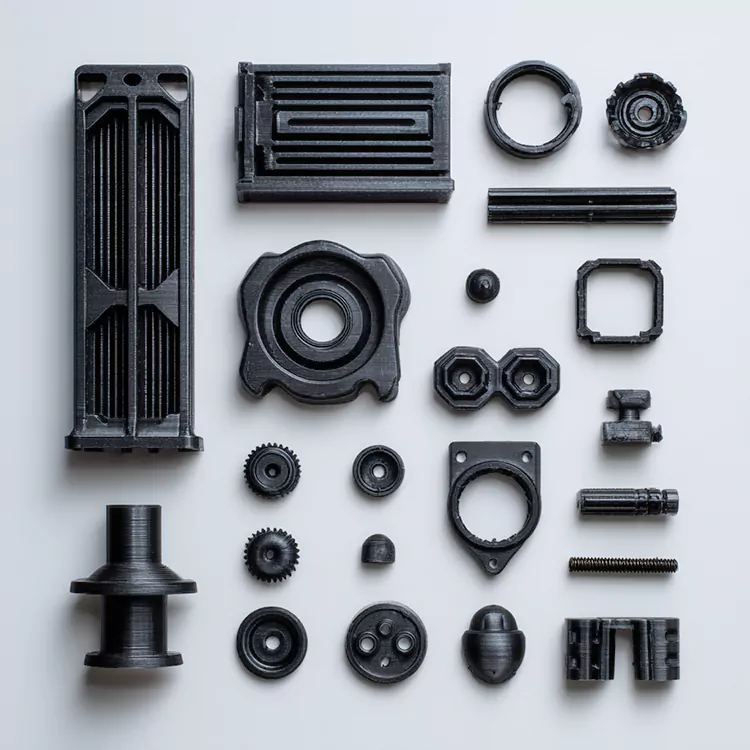
Table of Contents
- 1. How Does 3D Printing Technology Work in Industrial Environments?
- 2. How Are Industrial 3D Printing Systems Configured and Evaluated?
- 3. How Is 3D Printing Applied Across Key Industry Sectors?
- 4. How Will 3D Printing Continue to Evolve in Manufacturing?
- Frequently Asked Questions About 3D Printing
- Conclusion and Industry Perspective
Outline
- Core principles of additive manufacturing
- Technical parameters and system performance
- Industrial applications and production workflows
- Scalability, customization, and future development
1. How Does 3D Printing Technology Work in Industrial Environments?
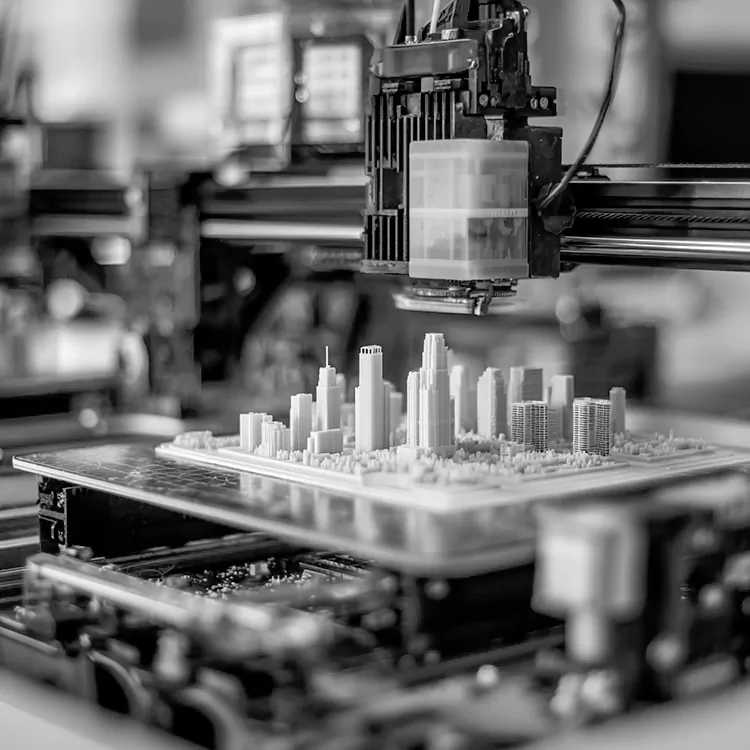
3D Printing is a manufacturing process that builds physical objects layer by layer from a digital model. Unlike subtractive manufacturing, which removes material from a solid block, additive manufacturing deposits or solidifies material only where needed. This approach enables highly complex geometries, reduced material waste, and rapid design iteration.
In industrial environments, 3D Printing systems typically rely on advanced software workflows. A digital CAD model is first converted into a printable file format, then sliced into thin cross-sectional layers. Each layer is sequentially fabricated through controlled material deposition, curing, or fusion, depending on the selected printing technology.
Industrial-grade 3D Printing emphasizes repeatability, dimensional accuracy, and material consistency. As a result, systems are equipped with closed-loop monitoring, temperature regulation, and precision motion control to maintain stable output across long production cycles.
2. How Are Industrial 3D Printing Systems Configured and Evaluated?
Selecting an industrial 3D Printing system requires careful analysis of technical parameters, operational requirements, and production objectives. Key performance indicators typically include build volume, layer resolution, material compatibility, and system throughput.
Below is a consolidated overview of common industrial 3D Printing product parameters used for professional evaluation:
| Parameter | Specification Range | Technical Relevance |
|---|---|---|
| Build Volume | 300 × 300 × 400 mm to 800 × 800 × 1000 mm | Determines maximum part size and batch capacity |
| Layer Thickness | 20–200 microns | Controls surface finish and dimensional accuracy |
| Material Types | PLA, ABS, Nylon, Resin, Metal Powder | Defines mechanical, thermal, and chemical performance |
| Printing Speed | 30–150 mm/s | Impacts production efficiency and cycle time |
| Power Requirements | 220V–380V Industrial Supply | Ensures stable operation for continuous workloads |
Beyond hardware specifications, evaluation also includes software compatibility, maintenance requirements, and operator training. Industrial users often prioritize systems that integrate seamlessly with existing digital manufacturing infrastructures.
3. How Is 3D Printing Applied Across Key Industry Sectors?
3D Printing has expanded beyond prototyping into full-scale industrial applications. In automotive manufacturing, it is widely used for functional prototypes, jigs, fixtures, and lightweight structural components. Aerospace applications focus on weight reduction and part consolidation, leveraging additive manufacturing to produce complex geometries that are not feasible with traditional methods.
In the medical sector, 3D Printing supports customized implants, surgical guides, and anatomical models. The ability to tailor products to individual specifications has redefined design flexibility while maintaining regulatory compliance through validated processes.
Industrial tooling and mold manufacturing also benefit from additive manufacturing. Conformal cooling channels, rapid tooling, and low-volume production runs enable faster time-to-market and cost optimization for manufacturers.
4. How Will 3D Printing Continue to Evolve in Manufacturing?
The future of 3D Printing is closely tied to advancements in materials science, automation, and digital integration. Ongoing development in composite materials, high-performance polymers, and metal alloys is expanding the range of end-use applications.
Automation is another critical factor. Automated post-processing, real-time quality monitoring, and AI-driven print optimization are improving consistency and reducing labor dependency. As a result, additive manufacturing is becoming increasingly viable for distributed and on-demand production models.
From a strategic perspective, enterprises are integrating 3D Printing into hybrid manufacturing systems, combining additive and subtractive processes to maximize efficiency and design freedom.
Frequently Asked Questions About 3D Printing
Q: How does 3D Printing differ from traditional manufacturing?
A: 3D Printing builds parts layer by layer directly from digital models, whereas traditional manufacturing typically removes material or relies on fixed tooling. This enables greater design flexibility and faster iteration.
Q: How accurate are industrial 3D Printing systems?
A: Industrial systems can achieve tolerances within ±0.1 mm, depending on material type, layer resolution, and post-processing methods.
Q: How should material selection be approached for 3D Printing?
A: Material selection depends on mechanical strength, thermal resistance, chemical exposure, and regulatory requirements. Performance testing is recommended before full-scale production.
Conclusion and Industry Perspective
As additive manufacturing continues to mature, 3D Printing is becoming a strategic production tool rather than a supplemental technology. Enterprises seeking flexibility, customization, and rapid response capabilities are increasingly adopting industrial 3D Printing solutions.
Honmor has established itself as a reliable partner in the field of industrial manufacturing equipment, providing professional 3D Printing solutions designed to meet evolving production requirements. Through continuous technical refinement and application-driven design, Honmor supports manufacturers in achieving scalable and efficient additive manufacturing workflows.
For organizations evaluating or expanding their 3D Printing capabilities, professional consultation and system matching are essential. Contact us to explore how industrial-grade 3D Printing solutions can be aligned with specific operational goals and long-term manufacturing strategies.
Related News
- What Makes Complex 5 Axis CNC Machining Parts the Backbone of Advanced Manufacturing?
- Why High Tolerance Titanium Turned Parts Are the Backbone of Aerospace and Medical Innovation?
- Why Are 5-Axis CNC Machined Auto Parts the Smart Choice for Complex Automotive Components?
- Why Are CNC Aluminum Turned Parts the Preferred Solution for Lightweight, High-Precision Components?
- Can Fast 3D Printed Prototypes Really Accelerate Your R&D and Reduce Costs?
- CNC Prototype Metal Components: Why Are They Essential for Your Next Project
Leave me a message