How Are Swiss Type Turned Parts Manufactured to Meet High-Precision Industrial Requirements?
Swiss Type Turned Parts are precision-machined components produced using Swiss-type CNC lathes, also known as sliding headstock lathes. These machines were originally developed for the Swiss watchmaking industry, where extreme dimensional accuracy and surface consistency were mandatory. Today, Swiss turning technology is widely applied across medical devices, aerospace assemblies, automotive systems, electronics, industrial automation, and fluid control equipment.
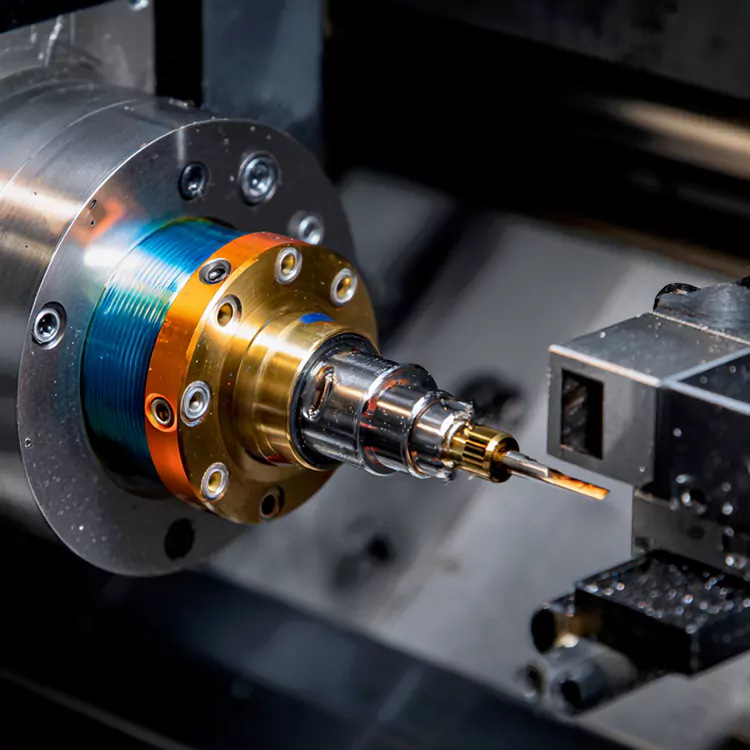
The defining characteristic of Swiss Type Turned Parts lies in the machining method rather than a single component category. Unlike conventional CNC turning, the bar stock in a Swiss-type lathe is supported by a guide bushing close to the cutting tool. This configuration minimizes deflection during machining, especially for long, slender parts with tight tolerances. As a result, complex geometries, micro-features, and consistent repeatability can be achieved in high-volume production.
Technical Parameters and Manufacturing Capabilities
Swiss Type Turned Parts are defined by strict dimensional control, material adaptability, and process stability. Their performance is closely tied to machine configuration, tooling strategy, and quality assurance systems. Below is a consolidated overview of commonly referenced technical parameters used by manufacturers and buyers when evaluating Swiss-turned components.
| Parameter Category | Typical Specification Range |
|---|---|
| Bar Diameter Capacity | Ø0.3 mm – Ø38 mm |
| Machining Tolerance | ±0.001 mm to ±0.005 mm |
| Surface Roughness | Ra 0.2 – 1.6 μm |
| Part Length Capability | Up to 10× bar diameter |
| Materials Processed | Stainless steel, carbon steel, aluminum alloys, brass, copper, titanium, engineering plastics |
| Machining Operations | Turning, drilling, milling, threading, grooving, cross-hole machining |
| Production Volume | Prototype to high-volume mass production |
| Inspection Methods | CMM, optical measurement, laser inspection, SPC |
Swiss-type machining allows multiple operations to be completed in a single setup. Live tooling and sub-spindles enable back-end machining, reducing secondary operations and cumulative tolerance stack-up. This process stability is particularly relevant in regulated industries where part-to-part consistency is audited.
Material selection plays a critical role in determining machining strategy. For example, austenitic stainless steels require optimized cutting parameters and chip control, while titanium alloys demand heat management and rigid tooling. Swiss lathes are engineered to accommodate these variations without sacrificing dimensional accuracy.
Quality control for Swiss Type Turned Parts typically involves in-process inspection combined with post-production verification. Statistical Process Control (SPC) is often implemented to monitor dimensional trends, ensuring long-term stability during extended production runs.
Application Logic and Design Considerations Across Industries
Swiss Type Turned Parts are frequently specified when component geometry or functional requirements exceed the capabilities of standard turning methods. Their use is not limited to a single sector but spans multiple industries where precision, repeatability, and compact design are essential.
In medical device manufacturing, these parts are used in surgical instruments, implantable components, and diagnostic equipment. Designs often include micro-diameters, thin walls, and complex internal features. Compliance with ISO 13485 and material traceability requirements further influences production planning.
Aerospace and defense applications rely on Swiss Type Turned Parts for sensor housings, fasteners, and control system components. Here, dimensional accuracy must be maintained under vibration, temperature variation, and mechanical stress. Material certifications and lot traceability are integral to acceptance.
Automotive and mobility systems use Swiss-turned components in fuel injection systems, transmission assemblies, and electronic connectors. High-volume production with minimal variation is critical, as even minor deviations can impact system efficiency or durability.
From a design perspective, engineers must consider manufacturability early in the development cycle. Features such as undercuts, cross-holes, and fine threads are well-suited to Swiss turning, but tolerance stacking, surface finish requirements, and material hardness should be aligned with realistic process capabilities. Early collaboration between design and manufacturing teams reduces iteration cycles and production risk.
Common Questions About Swiss Type Turned Parts
Q: How do Swiss Type Turned Parts maintain accuracy during long production runs?
A: Accuracy is maintained through guide bushing support, rigid machine construction, controlled cutting parameters, and continuous monitoring using SPC systems. Tool wear is managed proactively, and in-process measurement ensures deviations are corrected before exceeding tolerance limits.
Q: What factors determine whether a component should be produced using Swiss turning instead of conventional CNC turning?
A: Key factors include part length-to-diameter ratio, tolerance requirements, feature density, material type, and production volume. Components with slender geometries, multiple precision features, or tight tolerances are typically better suited for Swiss-type machining.
Industry Outlook, Supply Chain Considerations, and Brand Commitment
As product designs continue to trend toward miniaturization and integration, Swiss Type Turned Parts remain a foundational manufacturing solution for precision-driven industries. While machining technology continues to evolve, procurement priorities increasingly emphasize supplier reliability, process transparency, and long-term quality performance.
Global supply chains require manufacturers to demonstrate not only machining capability but also consistency in documentation, inspection records, and communication. Lead time predictability and scalability are equally important, particularly for customers transitioning from prototype validation to mass production.
Within this context, Honmor is positioned as a dedicated manufacturer of Swiss Type Turned Parts, supporting a wide range of industrial applications with controlled processes and engineering-focused collaboration. Emphasis is placed on material compliance, dimensional integrity, and stable production outcomes aligned with customer specifications.
For organizations evaluating precision component suppliers or seeking to optimize existing designs for Swiss-type machining, direct technical communication is essential. To discuss specific project requirements, material considerations, or production timelines, interested parties are encouraged to contact us for detailed support and consultation.
Related News
- What Makes Complex 5 Axis CNC Machining Parts the Backbone of Advanced Manufacturing?
- Why High Tolerance Titanium Turned Parts Are the Backbone of Aerospace and Medical Innovation?
- Why Are 5-Axis CNC Machined Auto Parts the Smart Choice for Complex Automotive Components?
- Why Are CNC Aluminum Turned Parts the Preferred Solution for Lightweight, High-Precision Components?
- Can Fast 3D Printed Prototypes Really Accelerate Your R&D and Reduce Costs?
- CNC Prototype Metal Components: Why Are They Essential for Your Next Project
Leave me a message