FAQ

What is CNC machining?
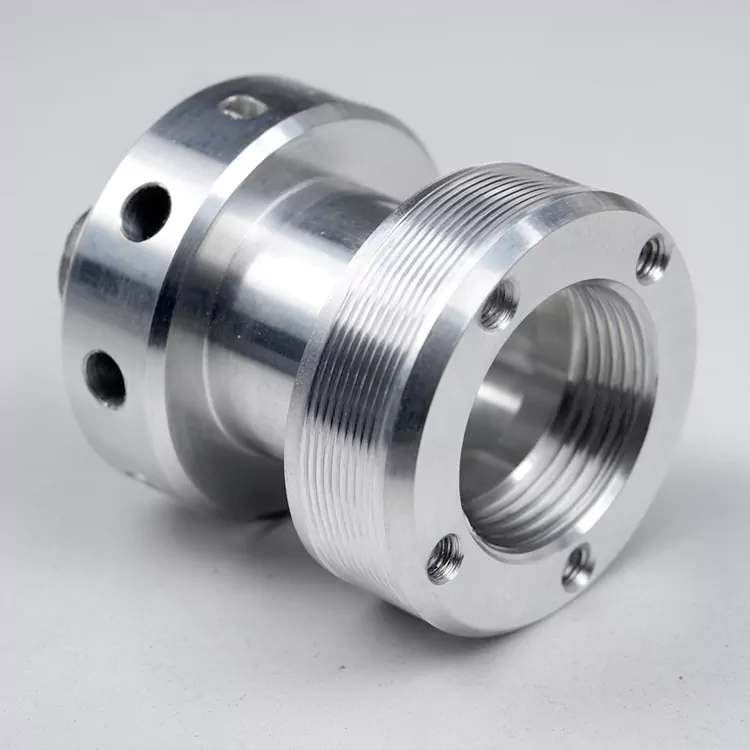
CNC machining is a manufacturing process where computers control machine tools to produce metal parts with high precision. It is widely used in industries such as aerospace, automotive, and medical devices.
What materials can be used in CNC machining?
CNC machining can be performed on a wide range of materials including aluminum, steel, brass, and plastics. The choice of material depends on the required strength, durability, and application.If you are not sure, we are here to help.
How accurate is CNC machining?
CNC machining offers extremely high accuracy, often within microns. The workable accuracy and tolerance depend on the geometry also. We would love to analyze the feasibility of your drawing, before quoting.
What are the advantages of CNC machining over traditional machining?
CNC machining offers several advantages over traditional machining, including faster production time, higher precision, and the ability to produce complex geometries with minimal human intervention.
How long does it take to manufacture a CNC machined part?
The production time depends on the complexity and size of the part, but typical turnaround times range from 7-15 days.
What industries use CNC machining?
Industries such as aerospace, automotive, medical, electronics, and robotics commonly use CNC machining for producing high-quality metal parts.
What is the minimum order quantity for CNC machining parts?
We accommodate both small and large orders. There is no strict minimum order quantity, but larger quantities can help reduce unit costs.
Can CNC machining handle large production runs?
Yes, CNC machining is suitable for both small one-off projets and large series productions. For high-volume orders, automation or robstic system can be integrated to optimize production time.
What is the cost of CNC machining?
The cost depends on factors such as material, complexity, and size of the part. However, CNC machining is cost-effective for small to medium production runs due to its high precision and efficiency.
What is the difference between CNC turning and CNC milling?
CNC turning is used for producing cylindrical parts by rotating the workpiece, while CNC milling involves the use of rotating cutting tools to remove material from a stationary workpiece.
Can you handle both prototyping and full production runs?
Yes, we specialize in both prototyping and full production runs. Whether you need a single prototype or large-scale production, we can handle it with precision and efficiency.
Do you offer custom CNC machining for non-metal materials?
Yes, we offer CNC machining services for a variety of non-metal materials, such as plastics and composites, alongside metals like aluminum and steel.
What types of CNC machines do you use?
We use state-of-the-art CNC machines, including CNC mills, CNC lathes, and multi-axis machines, Swiss type lathes, to ensure the highest precision and quality for every part we produce.
How do you ensure the quality of CNC machined parts?
We employ rigorous quality control procedures, including precise measurements and inspection techniques such as 3D scanning and CMM (Coordinate Measuring Machines) to ensure every part meets the required specifications.
Can you help with design improvements or modifications?
Absolutely! We offer design consultation services and can help optimize your designs for better performance, manufacturability, and cost-efficiency.