2025 CNC Manufacturing: Smart Upgrade & Green Transition Drive Global Market Boom
The global CNC machining manufacturing sector is entering a golden period of structural growth in 2025. Driven by surging demand from high-end manufacturing fields and breakthroughs in intelligent-green integration technologies, the industry has achieved a dual leap in scale and quality. Latest data shows the global market size is expected to reach $185 billion this year, with China contributing nearly 40% of the share and becoming the core engine of global industry growth.
Market Scale Explodes, High-End Demand Becomes Main Driver
The industry's growth momentum is concentrated in high-value segments. In China, the market scale is projected to hit 500 billion yuan in 2025 and is expected to climb to 850 billion yuan by 2030 with an 8.2% CAGR. Downstream demand presents a "three-pillar" pattern: the aerospace sector creates a 21.4 billion yuan direct processing market, with C919 fuselage frame processing taking over 120 hours per unit—65% longer than traditional models; new energy vehicles drive a 38 billion yuan annual CNC processing market, where battery tray processing demand surged 58% year-on-year in the first four months; and medical device manufacturing pushes micro-machining to become mainstream, with implantable device components requiring micron-level precision.
Notably, the demand structure is shifting from single-part processing to integrated solutions. A senior executive at a leading CNC enterprise revealed, "Customers now value not only machining accuracy but also the ability to provide digital twin-based process simulation and supply chain collaborative services, which has pushed profit margins for high-end solutions to exceed 35%."
Technological Breakthroughs: Multi-Axis Intelligence and Domestic Substitution Accelerate
Technological iteration is reshaping industry competition. Five-axis linkage equipment has become the core of high-end manufacturing—its global market scale is expected to reach $21.8 billion in 2025, with China's market share accounting for 35%. Although imported equipment like DMG MORI still leads in dynamic accuracy (±0.003 mm), domestic enterprises are narrowing the gap: Shenyang Machine Tool's five-axis products have achieved ±0.008 mm positioning accuracy, cutting the performance gap with German and Japanese brands by 30%.
Intelligent upgrading is advancing by leaps and bounds. AI-driven adaptive control systems have become standard in mid-to-high-end equipment, extending tool life by 40%. Digital twin technology is widely applied in aerospace component processing, shortening new product trial cycles by 40%. The penetration rate of intelligent equipment in China is expected to exceed 40% this year, with AI-enabled CNC machining centers becoming a new growth pole—their market scale may surpass 20 billion yuan by 2030.
Domestic substitution has made significant progress. The localization rate of upstream core components has risen from 45% to 60%, and the penetration rate of domestic CNC systems is expected to jump from 42% to 68%, reducing procurement costs by 25-30%. Policy support has provided strong impetus: the 14th Five-Year Plan has increased R&D subsidies to 4.5% of revenue, while import substitution policies have cut high-end equipment procurement costs by 18%.
Green Transformation: "Circular Intelligent Manufacturing" Becomes New Competition Point
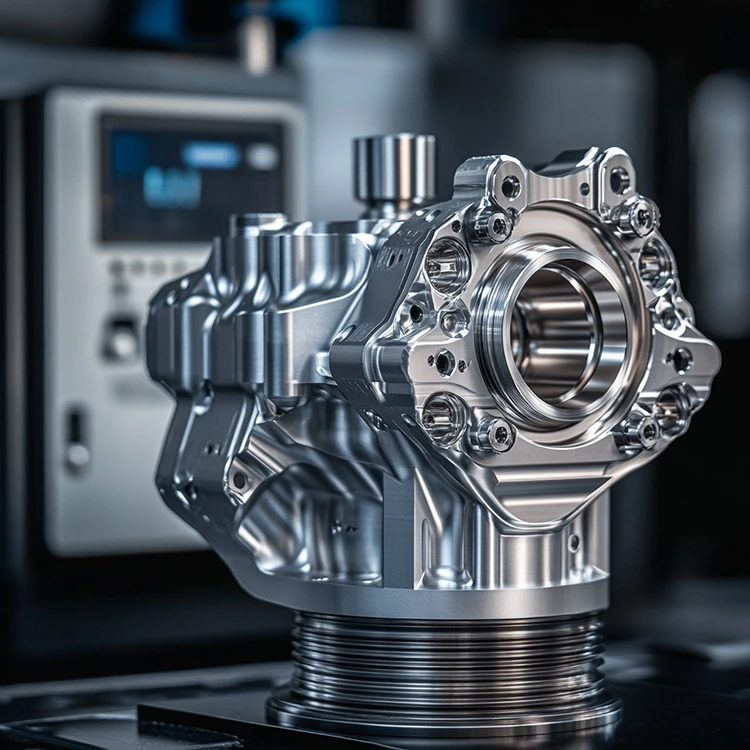
Environmental protection has evolved from a compliance requirement to a core competitiveness. Shenzhen Ruigesheng Equipment Co., Ltd. has pioneered the application of full-scenario circular intelligent manufacturing system technology in the industry, reducing CNC processing pollutants to below 3% while increasing production profits by 3-5%. Their "in-situ green low-carbon intelligent recycling technology for waste cutting fluid" has been included in the national green technology promotion catalog, achieving simultaneous progress in waste reduction, emission reduction, and carbon reduction.
Leading enterprises are actively practicing green manufacturing. In the Yangtze River Delta and Pearl River Delta industrial clusters, graphene cooling systems and recycled aluminum workpieces are widely used, reducing energy consumption per unit output by 28%. A leading enterprise in Suzhou has saved over 12 million yuan in electricity costs annually through heat recovery systems. The promotion of minimal quantity lubrication (MQL) systems has reduced coolant usage by 90% in key sectors, aligning with global carbon reduction goals.
Regional Cluster Effect: Dual Core of Yangtze River Delta and Pearl River Delta Leads Development
China's CNC manufacturing shows obvious regional agglomeration characteristics. The Yangtze River Delta and Pearl River Delta contribute 62% of the national market share, with 34% and 28%, respectively. The Yangtze River Delta leads in high-precision processing for automotive and aerospace, with an equipment density of 5.2 units per square kilometer; the Pearl River Delta excels in consumer electronics and mold processing, with 4.8 units per square kilometer—both far exceeding the national average of 2.3 units.
This cluster advantage stems from complete industrial supporting facilities: the two regions gather 78% of high-end CNC system suppliers, 65% of precision tool manufacturers, and 83% of industrial software service providers nationwide. Talent reserves are equally robust: the Yangtze River Delta has 41% of the country's key CNC technology laboratories, while the Pearl River Delta's dual-system vocational education delivers 23,000 senior technicians annually.
Challenges and Outlook: Opportunities in Integration
Despite the booming development, the industry still faces multiple challenges. The talent gap remains prominent—senior CNC technicians account for only 3.5% of the workforce in China, far below 35% in developed countries. The import dependence of key components like high-end grating rulers is still 45%, and trade frictions may cause supply chain fluctuations. The technology iteration cycle has shortened to 18 months, intensifying R&D investment pressure.
Related News
- What Makes Complex 5 Axis CNC Machining Parts the Backbone of Advanced Manufacturing?
- Why High Tolerance Titanium Turned Parts Are the Backbone of Aerospace and Medical Innovation?
- Why Are 5-Axis CNC Machined Auto Parts the Smart Choice for Complex Automotive Components?
- Why Are CNC Aluminum Turned Parts the Preferred Solution for Lightweight, High-Precision Components?
- Can Fast 3D Printed Prototypes Really Accelerate Your R&D and Reduce Costs?
- CNC Prototype Metal Components: Why Are They Essential for Your Next Project
Leave me a message