IMG
VIDEO
High Precision Swiss Lathe Turning for Medical Components
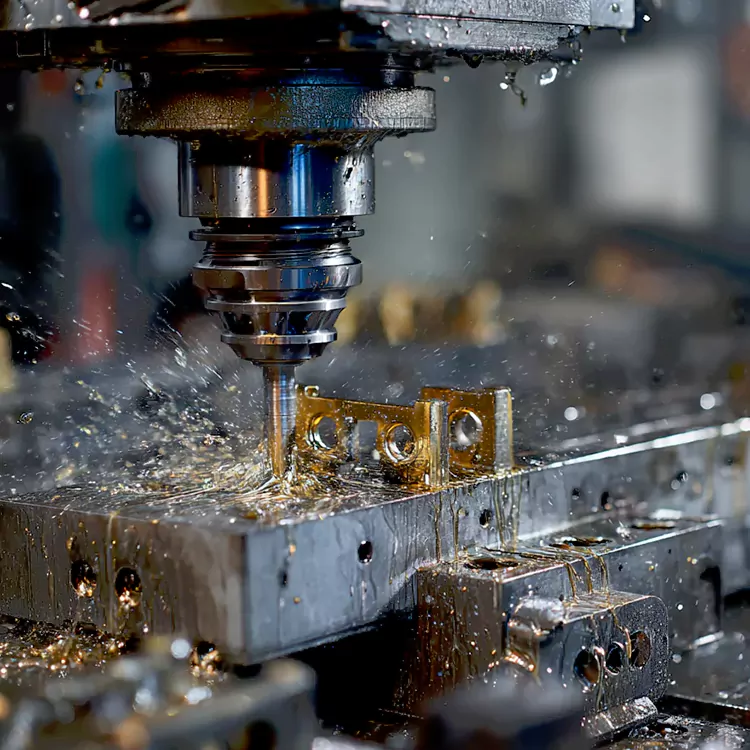
High Precision Swiss Lathe Turning for Medical Components from Honmor factory is a specialized machining process for ultra-precise medical parts; Honmor helps clients customize, order, and source these biocompatible components for orthopedics, minimally invasive surgery, and dentistry. It adopts Swiss lathe to realize the tolerance of ±0.05mm which can meet the standards of ISO 13485/FDA and ensures sterility, providing reliable procurement for medical device manufactures.
Honmor durable High precision Swiss lathe turning for medical components is a kind of high-precision CNC machining process that adopts Swiss type lathe to produce medical parts, they featured by ultra-tight tolerances, biocompatible materials and compliance with strict medical regulations. Different from general Swiss lathe turning, this process can be customized according to medical requirements, for example: it focuses on minimizing part contamination which ensures material biocompatibility and integrates complex, miniaturized features for minimally invasive or implantable devices. Honmor specializes in this process and uses medical-grade equipment with anti-corrosion tooling and air-bearing spindles to machine materials like Ti-6AI-7Nb, 316 stainless steel and commercially pure Ti Grade 2. All steps from material cutting to cleaning are conducted in Class 1000 clean room and the parts need to undergo ultrasonic degerasing and gamma sterilization to eliminate biological contaminants. Therefore, whether customers want to customize small batch of Swiss Lathe Turning for medical components or procure large batch of sterilized parts. Honmor is able to meet medical device regulations, simplifying the purchasing pf safe, precise medical components.

Core Advantages
Strict Biocompatibility and Regulatory Compliance
The most critical advantage of swiss lathe turning for medical components is its adherence to medical biocompatibility and regulatory standards. Honmor only uses materials certified to ISO 10993 (biological evaluation of medical devices): Ti-6Al-7Nb (low nickel, avoids allergic reactions for orthopedic implants), 316L LVM (low carbon, reduces corrosion in body fluids), and pure Ti Grade 2 (excellent osseointegration for dental parts). The whole course of working are documented in batch records and support full traceability covering material lot numbers to cutting tool calibration logs. For example, when producing Ti-6AI-7NB hip implant stems, Honmor will provide a certificate of Compliance that includes material composition, biocompatibility test result and sterilization validation data which can support client fast-track their medical device registration, because Honmor’s process have met ISO 13485 and FDA QSR 820 requirements.
Ultra-miniaturization and complex feature integration
Medical devices highly rely on the parts with extreme miniaturization and integrated complex features, that’s the point where High precision Swiss lathe turning for medical components excels at. Honmor’s Swiss lathes can machine parts as small as 0.08mm in diameter (e.g., neurovascular catheter guidewires) and integrate up to 10+ features in one setup: micro-lumens (0.1mm diameter for drug delivery), tapered tips (angle tolerance ±0.1° for tissue penetration), and self-locking threads (ISO 4H tolerance for implant fixation). For minimally invasive surgery customer, Honmor machined 316L stainless steel biopsy needles by this process, which had a 0.5mm outer diameter, a 0.2mm inner lumen and a 30°tapered tip. The one-time machining eliminated clamping errors, ensuring the lumen remained centered (concentricity ≤0.001mm)—critical for accurate tissue collection and avoiding patient injury.

Sterility and contamination control
At Honmor, sterility will be taken into the first consideration when processing High Precision Swiss Lathe Turning for Medical Parts to prevent post-implant infections or cross-contamination. Honmor uses class 1000 clean room as machining environment equipped with HEPA filtration and anti-static flooring. Cutting fluids are made of medical-grade, non-toxic formulations and fished parts undergo three-step cleaning including ultrasonic degreasing, passivation and vacuum drying. For implantable parts, Honmor offers optional gamma sterilization (25-40 kGy) with validation reports—ensuring parts are ready for direct integration into sterile medical devices. A European orthopedic client reported that Honmor’s sterile-processed implant screws reduced their in-house sterilization time by 50%, accelerating product launch.
Technical Parameters
|
Parameter Item |
Unit |
Honmor Standard Value |
Customizable Range |
Application Significance |
|
Medical-Grade Materials |
- |
Ti-6Al-7Nb, 316L LVM, Pure Ti Grade 2 |
Ti-6Al-4V ELI, CoCrMo, PEEK (medical) |
Ti-6Al-7Nb: orthopedic implants; 316L LVM: surgical instruments |
|
Machining Tolerance |
mm |
±0.0008 |
±0.0005 (ultra-precise) - ±0.002 (standard) |
±0.0005: dental implants; ±0.001: catheter guidewires |
|
Surface Roughness |
μm (Ra) |
0.08 |
0.05 (mirror polish) - 0.2 (matte) |
0.05μm: implantable parts (reduce tissue irritation); 0.2μm: surgical tools |
|
Minimum Part Diameter |
mm |
0.08 |
0.05 - 0.5 |
0.05mm: neurovascular guidewires; 0.5mm: biopsy needles |
|
Maximum Length-Diameter Ratio |
L/D |
50:1 |
30:1 - 60:1 |
60:1: long catheter shafts; 30:1: orthopedic screws |
|
Sterilization Compatibility |
- |
Gamma (25-40kGy), Autoclave (121℃) |
Ethylene Oxide (EO), Dry Heat (180℃) |
Gamma: implantable parts; EO: heat-sensitive instruments |
|
Production Cycle |
Days |
5 - 12 |
3 (expedited prototypes) - 18 (large-batch) |
3 days: urgent surgical tool prototypes; 18 days: 10,000-piece implant screws |
Application Fields
Orthopedic Implants
High Precision Swiss Lathe Turning for Medical Components is widely used for orthopedic implants that require osseointegration and load-bearing capacity—such as Ti-6Al-7Nb hip implant stems, 316L LVM knee femoral components, and self-locking spinal screws. Honmor produced Ti-6Al-7Nb hip stems for a European medical device firm: Their tapered necks are suitable for acetabular cups, and threaded sections ensure secure bone fixation. Besides, these stems passed 1000-hour simulated body fluid corrosion testing and meet the standards of ISO 14630. According to surgeon’s feedback, the implants’ revision rates are reduced by 18% due to its precise adaptability.

Minimally Invasive Surgical (MIS) Instruments
MIS devices rely on this process for miniaturized, high-precision tools—including 316L stainless steel catheter guidewires, PEEK endoscopic biopsy forceps shafts, and Ti Grade 2 laparoscopic trocar tips. Honmor supplied 316L guidewires to a U.S. MIS company: these wires (0.3mm diameter, L/D=45:1) had a gold-plated tip (for X-ray visibility) and a micro-grooved surface (Ra 0.1μm) for smooth vascular navigation. The guidewires’ tolerance of ±0.0008mm ensured they could pass through 0.4mm-diameter blood vessels without causing trauma. During clinical trials, the guidewires achieved a 99.2% success rate in reaching target lesions, outperforming competitors’ products. For biopsy forceps shafts, Honmor’s PEEK parts (machined via this process) are lightweight (40% lighter than steel) and flexible, allowing surgeons to access hard-to-reach areas with better control.
Dental Devices
Dental components demand both precision and aesthetic consistency—our swiss lathe turning for medical components meets this need for parts like Ti Grade 2 dental implant abutments, 316L stainless steel crown connectors, and ZrO₂-coated orthodontic brackets. Honmor manufactured Ti Grade 2 abutments for a Japanese dental brand: these parts had an internal hexagon (tolerance ±0.001mm) to fit implant fixtures, and a polished occlusal surface (Ra 0.08μm) for crown bonding. The abutments’ osseointegration rate (measured via CT scans) reached 98% after 6 months, matching the performance of more expensive titanium alloy alternatives. For orthodontic brackets, Honmor’s process machines 316L parts with micro-locking slots (0.15mm width, tolerance ±0.0015mm) that ensure stable bracket-wire connection, reducing patient adjustment visits by 20%.

Procurement and Customization Process
Honmor provides a full set of procurement and customization process
1, customers share requirement with Honmor covering 2D/3D drawings, alloy grade preference, tolerance grade and surface treatment.
2, Honmor will issue specific quotation within 12 hours including alloy material cost, machining fee, surface treatment cost and certification fee.
3, For customized parts, Honmor would produce several samples first and after them passing our internal test, the samples will be sent to customer for further test.
4, After receiving customer’s approval, Honmor will start mass production immediately to ensure timely delivery.
Hot Tags: Precision Swiss Lathe Medical Parts, Medical Device CNC Turning, High Accuracy Medical Components
Related Category
Send Inquiry
Contact Info
-
Address
Bild 15#, 2nd Industrial Zone, MaAnShan Village, Shajing Town, Bao'an District, Shenzhen, Guangdong, China
-
Tel
-
Email
For inquiries about Rapid Prototyping, CNC Machining Parts, Plastic Injection Parts or price list, please leave your email to us and we will be in touch within 24 hours.