Swiss Lathe Machining
Quality Swiss Lathe Machining from Honmor is a high-precision CNC turning process for small, slender components; Honmor helps clients customize, order, and source parts via this technology for medical, electronics, automotive, and watch sectors. It adopts sliding-headstock lathe to realize tolerance of ±0.01mm and integrate multi-process machining to avoid clamping errors. Honmor strictly follows the standards of ISO 9001/13485, which ensures reliable global procurement for precision part needs.
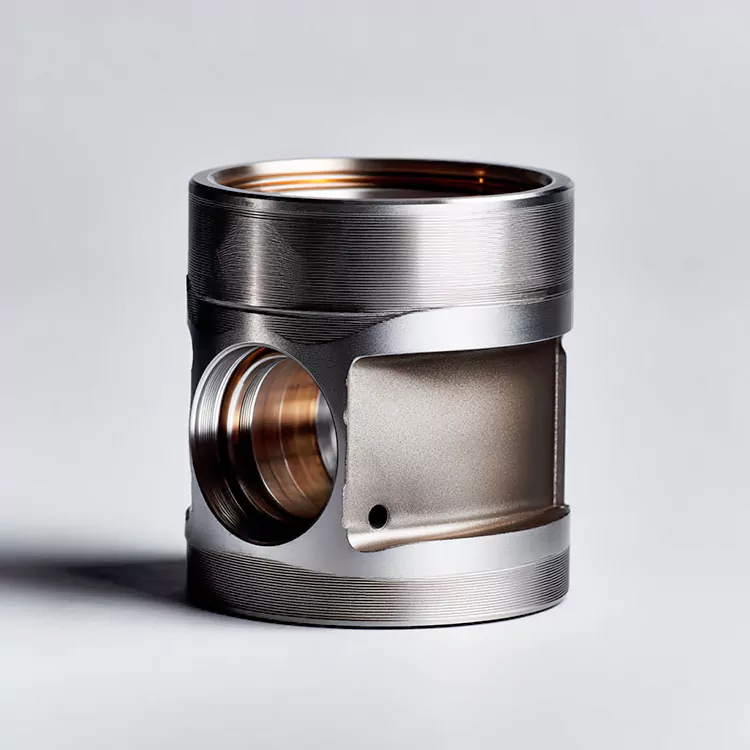
Honmor customized Swiss Lathe Machining refers to a specialized CNC turning process that uses sliding-headstock lathes (Swiss-type lathes) to produce high-precision, small-diameter components—typically with slender geometries (length-to-diameter ratio up to 60:1) and complex features (micro-holes, threaded sections, tapered tips). Different from traditional fixed-headstock lathes(which prone to deflection from slender parts), this process uses fixed guide bushing that supports the workpiece close to cutting tools, which can minimizing vibration and ensure ultra-tight tolerances. Honmor conducts processing through advanced Swiss-type lathes equipped with live tooling and multi-axis linkage, which enable one-time completion of 6-12 features without secondary operations. The common materials include medical-grade 316L stainless steel, easy-to-cutting brass C36000, titanium alloy Ti-6AI-4V, and engineering plastic PEEK. Besides, all processing procedures are conducted in thermostatic workshop to avoid thermal deformation. Thus, Honmor has ability to provide products whether customers want to customize small batch of Swiss-type lathe machined parts or purchase large batch of components(such as electronic connector pins), Honmor is able to provide tailored solution which can achieve a balance between precision, efficiency, and material performance, simplifying the procurement process effectively.

Core Advantages
Ultra-Tight Tolerance for Precision Applications
Using this one can achieving tolerance as tight as ±0.01mm and concentricity less than 0.08mm that is critical for parts which require precise mating. Honmor make use of this process to produce 316L stainless steel medical biopsy needles for a European medical device client, the needles had a tapered tip angle tolerance of ±0.1°and an inner lumen positional tolerance of ±0.15mm that ensure accurate tissue sampling without patient injury. Compared to traditional lathe machining, this kind of process can reduce assembly errors by 80%, especially suitable for high-value parts like electronic sensor pins or watch movement components.
Efficient muti-process integration
Swiss-type lathes adopt integrated design of live tooling and muti-axis, which make they are able to complete turning, milling, drilling, and threading in one setup, eliminating cumulative errors from repeated clamping. For example, a Chinese electronics client needed brass USB-C connector pins (0.6mm diameter) with 3 micro-holes (0.15mm diameter) and a threaded section: Honmor’s lathe machining process finished each part in 45 seconds, compared to 2 minutes with traditional lathes (which required 3 clamping steps). This efficiency shortens production cycles by 50% for complex small parts, helping clients meet tight market launch deadlines when they order or source in bulk.

Superior Slender Part Machinability
The guide bushing in it solves the deflection problem of traditional lathes when processing slender parts (length-to-diameter ratio >30:1). Honmor processed 0.8mm diameter, 40mm length brass automotive sensor shafts (L/D=50:1) via this process—each shaft maintained a straightness tolerance of ±0.002mm with no bending or vibration marks. As for those customers in need of long and thin parts(such as medical catheter shafts, automotive fuel injector pins), it is the only feasible and stable solution to ensure dimensional stability, which is helpful for avoiding costly part rejection caused by deformation.
Strong material adaptability
Honmor’s process of this product is able to handle a wide range of materials from soft metal to hard, corrosion-resistant alloys and even engineering plastics. For soft materials, high-speed cutting tools (up to 3,000m/min) reduce processing time; for hard alloys, cubic boron nitride (CBN) tools maintain edge sharpness to avoid tool wear. Honmor used PEEK to produce medical endoscopic guide tubes via Swiss Lathe Machining—these parts had a tolerance of ±0.003mm and resisted high-temperature sterilization (121℃ autoclaving), meeting ISO 13485 standards. This adaptability allows clients to source diverse small precision parts from a single supplier, simplifying procurement management.
Technical Parameters
|
Parameter Item |
Unit |
Honmor Standard Value |
Customizable Range |
Application Significance |
|
Machinable Materials |
- |
316L Stainless Steel, C36000 Brass, Ti-6Al-4V, PEEK |
440C Stainless Steel, 6061Al, POM, Ti-6Al-7Nb |
316L/Ti-6Al-4V: medical; C36000: electronics; PEEK: high-temp |
|
Machining Tolerance |
mm |
±0.001 |
±0.0008 (ultra-precision) - ±0.003 (standard) |
±0.0008: watch parts; ±0.001: medical devices; ±0.003: automotive sensors |
|
Surface Roughness |
μm (Ra) |
0.1 |
0.08 (mirror polish) - 0.8 (matte finish) |
0.08μm: medical contact parts; 0.8μm: internal structural parts |
|
Minimum Part Diameter |
mm |
0.08 |
0.05 - 0.5 |
0.05mm: micro-electrode pins; 0.5mm: biopsy needles |
|
Maximum Length-Diameter Ratio |
L/D |
50:1 |
30:1 - 60:1 |
60:1: medical catheter shafts; 30:1: automotive connector pins |
|
Production Cycle |
Seconds/Part |
30 - 120 |
15 (simple parts) - 240 (complex parts) |
15s: brass terminals; 240s: Ti-6Al-4V medical parts |
|
Hardness Compatibility |
HRC |
≤60 |
≤20 (soft Al) - ≤65 (hard 440C) |
≤20: aluminum parts; ≤65: wear-resistant 440C parts |
Application Fields
Medical device industry
Swiss Lathe Machining is vital for medical devices with demand of miniaturization and precision, such as 316L stainless steel guidewires, Ti-6AI-7Nb orthopedic implant screws and PEEK endoscopic tool shafts. The guidewires that Honmor manufactured for a American device company have dual features that micro-grooved surface for smooth vascular navigation and a gold-plated tip for X-ray visibility. The guidewires passed the test of more than 10,000 times bending with no fatigue failure, meeting the standards of CE Class III medical device. For implant screws, those produced by Honmor’ Swiss type lathe ensures precise fitting between threads and bone tissue, which can reduce implant revision rates by 15%.
Consumer and micro electronics
In the field of electronics, the process have ability to produce small precision parts such as brass USB4 connector pins, aluminum smartwatch battery terminals and 440C stainless steel sensor probes. Honmor once manufactured 500,000 pieces of brass connector pins for a South Korean consumer electronic enterprise, these parts with demand of cross-grooved tolerance of ±0.01mm to ensure compatible plug-in with cables, besides, their tin-plated surface maintain stable conductivity. Client’s feedback indicate that the parts produced by Honmor just have 0.3% defect rate, far lower than the 2% rate of their previous supplier. For smartwatch terminals, this process integrated 3 stepped diameters with strict tolerance of ±0.02mm, perfectly matching the watch’s slender thickness.

Automotive and new energy vehicles
Automotive industry rely on Swiss lathe to process small precision component such as 304 stainless steel NEV battery temperature sensor shafts, 42CrMo transmission valve cores and brass fuel injector pins. A Chinese leading new energy vehicles brand purchased a batch of sensor shafts which had a spiral groove depth tolerance of ±0.03mm to ensure accurate temperature control, and their corrosion-resistant surface can withstood battery electrolyte exposure. These shafts maintain no performance degradation after durability test of driving 50,000km. For transmission valve cores, this process can achieve positional tolerance of ±0.02mm and reduce noise by 12%
Procurement and Customization Process
● Demand Communication and Design Optimization
● Quotation and Contract Signing
● Sample Production and Quality Inspection
● Bulk Production and Global Delivery
Honmor Service Advantages
Honmor has over 12 years of experience and holds official certifications such as ISO 9001, AS9100, and IATF 16949. Our factory offers 24/7 after-sales service and maintains a three-month spare parts inventory to meet the needs of returning customers. Products can be replaced free of charge within six months, meeting customer purchasing or ordering needs.


Related Category
Send Inquiry
Contact Info
-
Address
Bild 15#, 2nd Industrial Zone, MaAnShan Village, Shajing Town, Bao'an District, Shenzhen, Guangdong, China
-
Tel
-
Email
For inquiries about Rapid Prototyping, CNC Machining Parts, Plastic Injection Parts or price list, please leave your email to us and we will be in touch within 24 hours.


News Recommendations